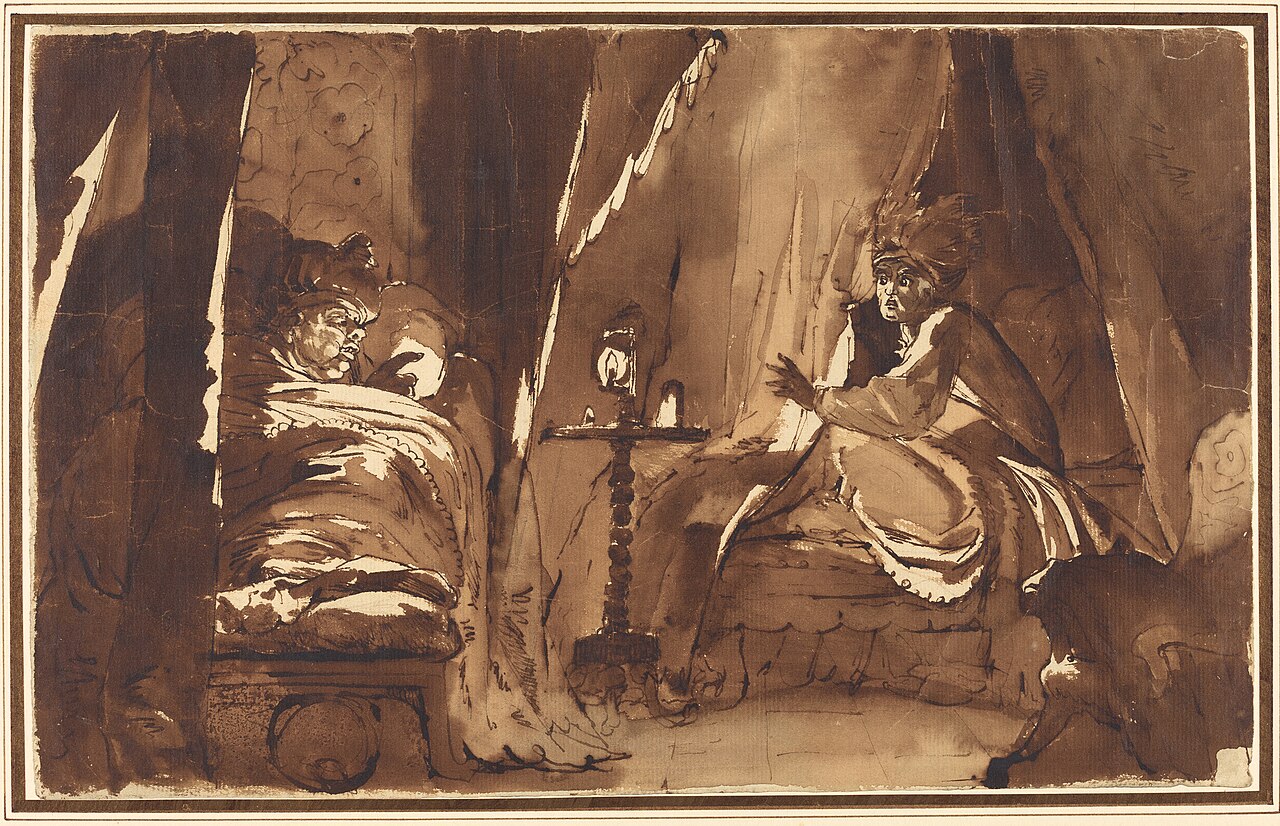
Across the early modern European record, the night keeps arriving in two pieces.
First sleep. Second sleep.
The historian Roger Ekirch found the phrases in diaries, depositions, household advice and literature. The waking stretch between them could be used for prayer, conversation, sex, a visit to a neighbour. It could belong to the night. It did not necessarily mean the night had gone wrong.
Think about what it means for a phrase to go unexplained in a written record. Nobody defines the words they expect everyone to know. Nobody writes down the shape of a night any more than you would write down the shape of a meal.
It was ordinary enough to go without an explanation.
That does not mean everybody slept four hours, woke for one, then slept four more. The record is too uneven for that, and historians disagree about how far it can take us. But it leaves an awkward fact for the present: a waking interval need not always have been counted against the sleeper.
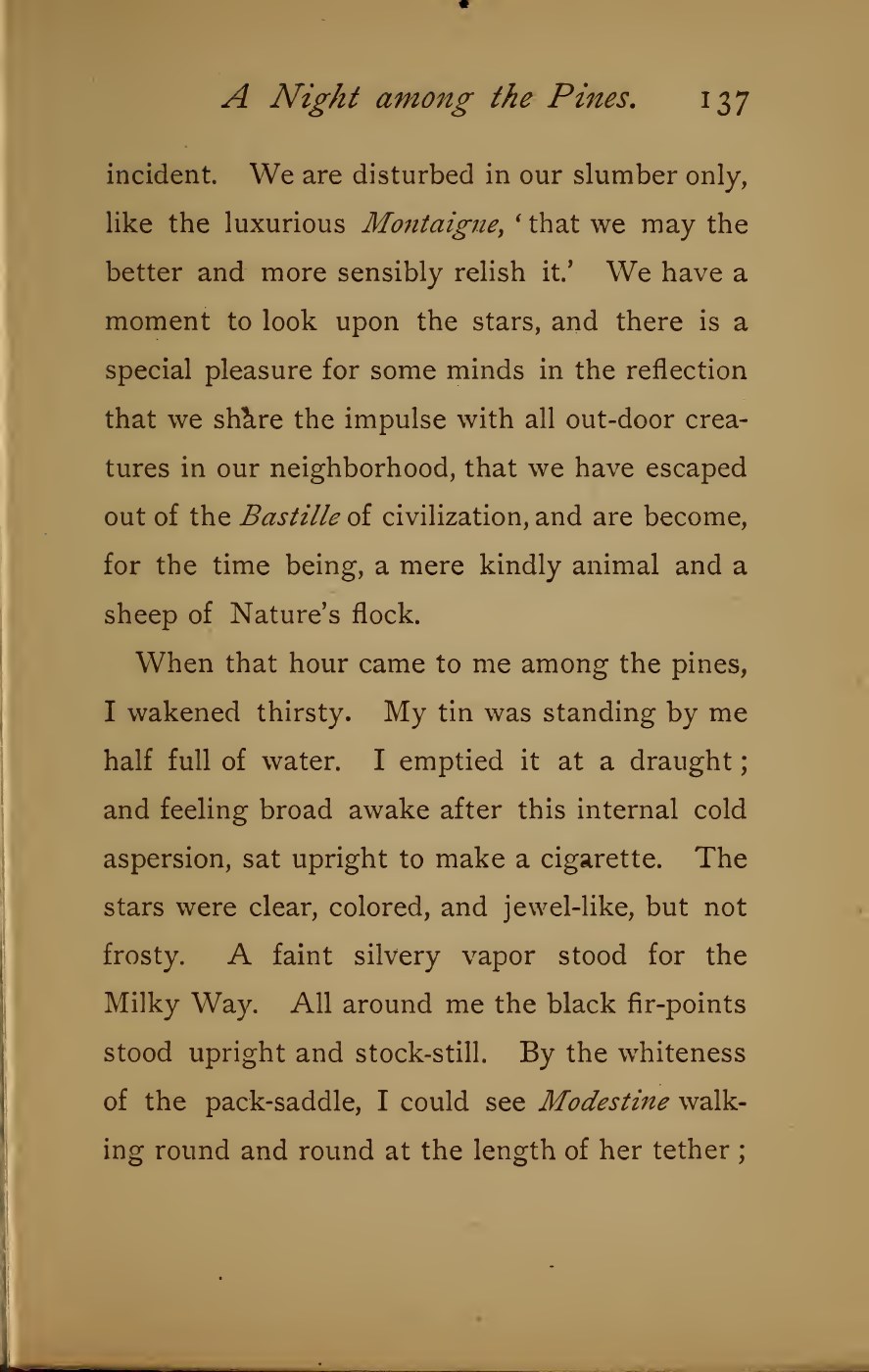
In Robert Louis Stevenson’s 1879 travel book, a night among the pines is broken by thirst. He drinks, sits up to roll a cigarette, and watches the stars while his donkey eats nearby.
“We have a moment to look upon the stars.”
He describes the interval with pleasure, then sleeps again before morning. This is one traveller’s night, not a survey of European sleep.
The eight-hour night has an equally awkward history. The number was not simply handed down by employers.
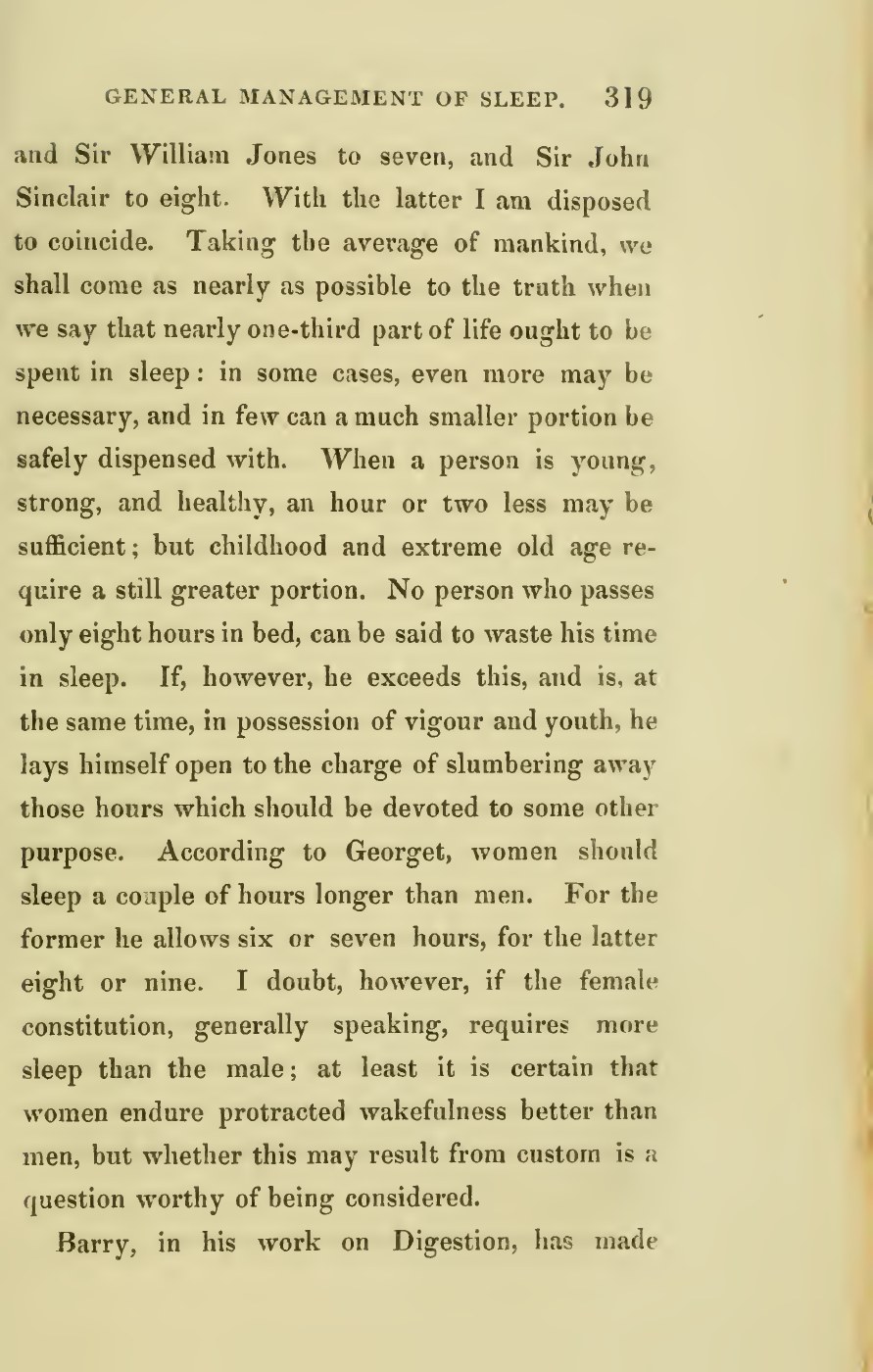
In Robert Macnish’s The Philosophy of Sleep, published in 1836, the physician weighs recommendations ranging from three hours to eight. He favours eight, allows for age and constitution, then draws a line around the healthy young sleeper.
Eight hours in bed need not be wasted time. More than that invites a charge of spending hours that ought to serve another purpose. pp. 318–319
Eight hours’ labour. Eight hours’ recreation. Eight hours’ rest.
The Melbourne stonemasons’ campaign won an eight-hour working day in 1856. A share of the day was being claimed back.
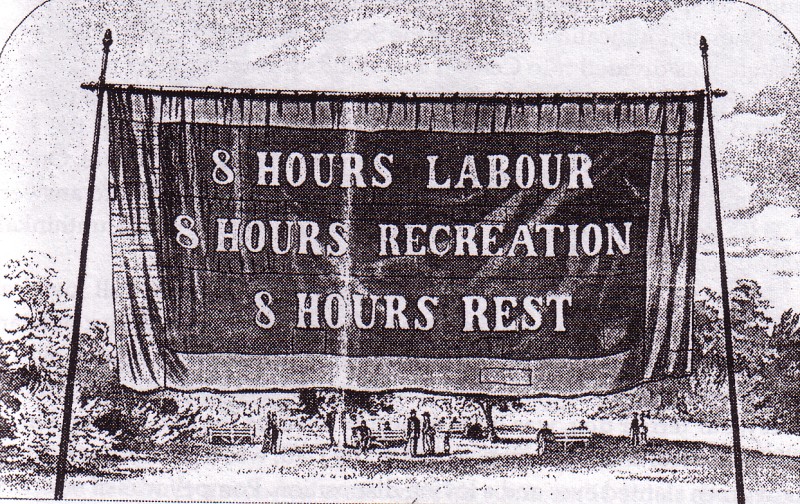
The last eight were time an employer could not take. They were not eight hours of unconsciousness, certified by a machine. There is a considerable distance between claiming a right to rest and being required to demonstrate that you used it efficiently.
Light and working hours
Light changed what could be done after dark. A factory that could run past dusk did, and a city that could stay open stayed open. The long passage between sunset and sunrise became available for work.
Light also affects the body’s timing. The change was physiological as well as social.
In Thomas Wehr’s experiment, extending darkness from eight hours to fourteen produced two sleep bouts separated by one to three waking hours. In a much later experiment with evening eReaders, the light from a screen delayed circadian timing compared with reading a printed book. Give a body a different environment and you may get a different night.
Nor is there one original night waiting to be recovered. A field study among Hadza, San and Tsimane communities found average sleep durations of 5.7 to 7.1 hours, without a regular long waking gap in the middle. The people slept well after sunset. Temperature and season mattered.
Another Hadza study found that, across twenty days, all monitored participants were simultaneously scored asleep for just eighteen minutes. Somebody was usually awake or in light sleep. The wrist records do not prove that anyone was standing guard. They do suggest a way of thinking about a night that belongs to a group, rather than to one person lying alone with a target.
A schedule adds something that the body cannot negotiate with. Seven in the morning.
You can wake at three, as people have always done. But now there is a fixed hour at which you must become useful again. The waking acquires a consequence. Then it acquires an audience: the person beside you, the doctor, the app.
This is not the invention of insomnia. Sleeplessness and attempts to treat it are older than the mill. Nor is chronic insomnia merely an unfashionable way to spend the night. It involves sleep difficulty despite opportunity, with distress or daytime impairment. People suffer from it.
A fixed working day can aggravate that difficulty without explaining every case of it.
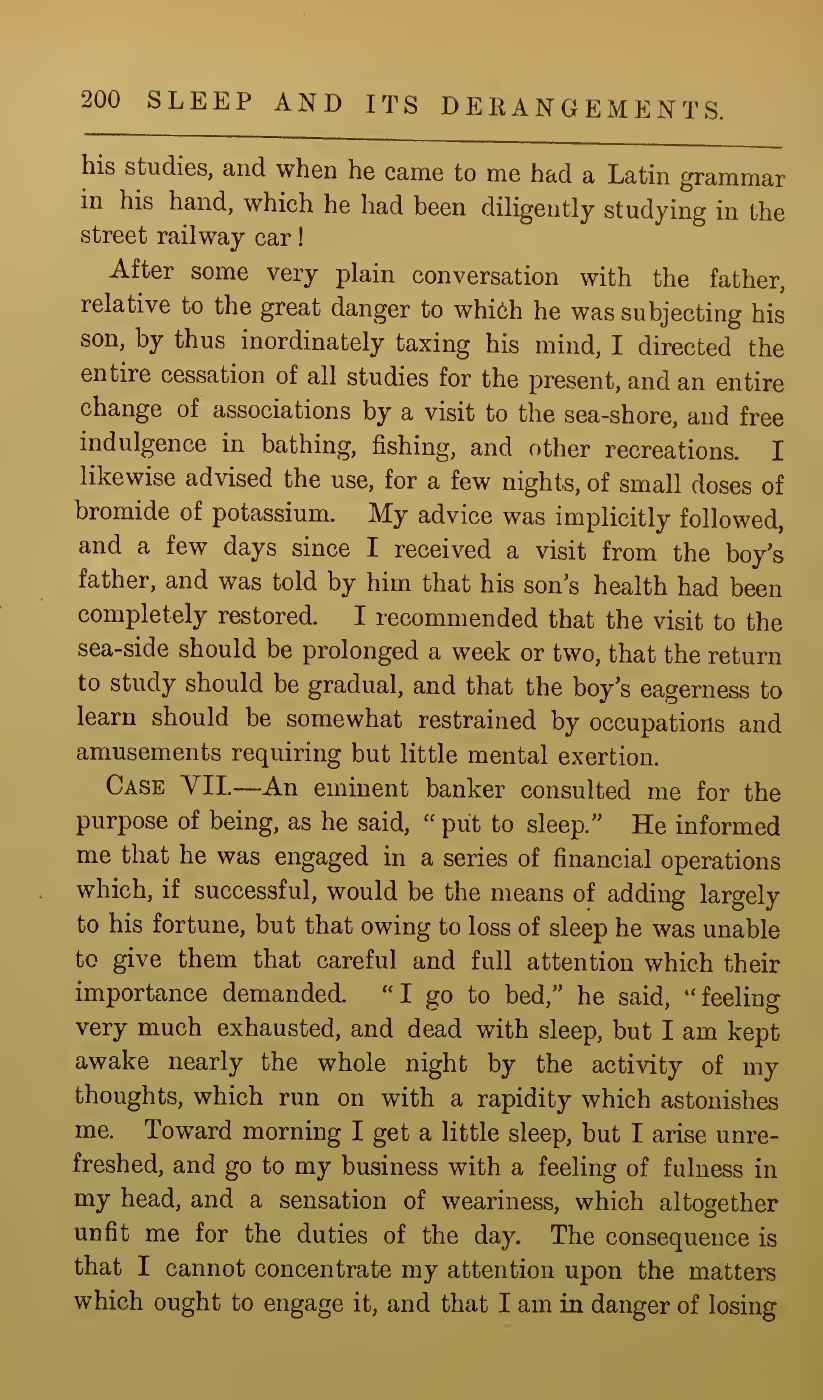
In William Hammond’s Sleep, Sleeplessness and the Derangements of Sleep, an exhausted banker asks to be “put to sleep.” At night his thoughts race through financial operations. By day he cannot concentrate on them. He fears losing money.
Hammond tells him to leave town for a week and take zinc oxide. The banker initially resists the trip. In the physician’s account, he returns reporting eight hours’ sleep a night and restored ability to work. pp. 200–201
This is a historical case report, with treatment and recovery tied together in a way that cannot establish what caused what. What it does establish is the complaint the doctor chose to record. Work follows the banker into bed. He wants sleep so that he can return to it.
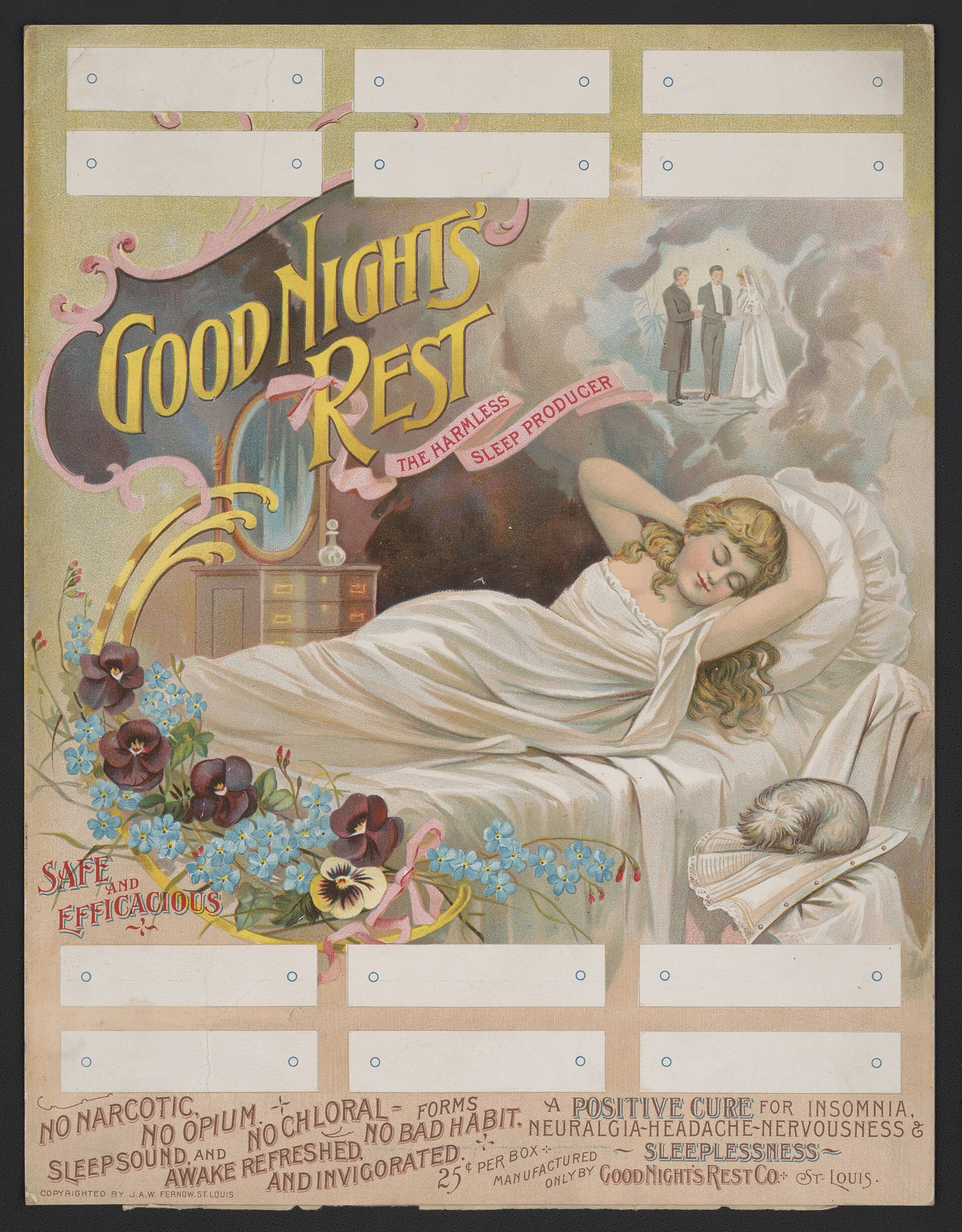
Look at what the old advertisement sells. The woman sleeps. The dream floats above her. The morning is already paid for: refreshed, invigorated, no bad habit.
Sleep in the laboratory
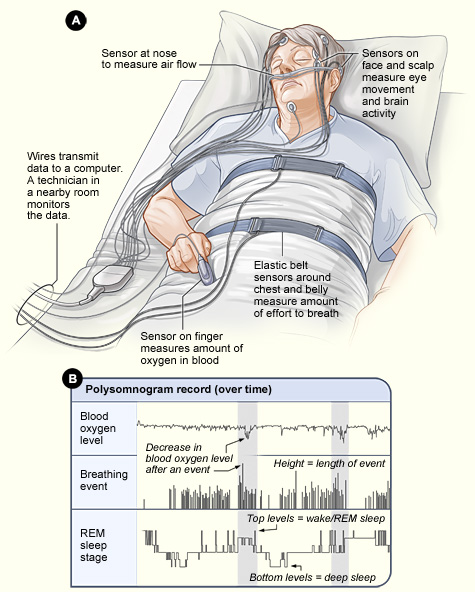
Latency to persistent sleep: how long until the sleeper goes under. Wake after sleep onset: how many minutes awake after sleep has begun. Total sleep time.
Three stopwatch quantities. They are useful. They can be compared between people and between treatments. They also make a particular sort of improvement very easy to see.
Take a real case. Suvorexant is an interesting drug to examine because its mechanism differs from that of many older sleeping pills. Those act through the brain’s GABA system. Suvorexant blocks the orexin receptors involved in holding you awake.
It takes the foot off the accelerator, to borrow the usual metaphor. The FDA approved it in 2014.
The American Academy of Sleep Medicine assessed it for its chronic insomnia guideline. At four weeks in one trial, the laboratory recorded more sleep. Then the researchers asked the sleepers how long they thought they had slept.
Here are the two columns. Same trial. Same four weeks. Same quantity: total sleep time, compared with placebo.
| Trial dose | Laboratory extra minutes | Sleep diary extra minutes |
|---|---|---|
| 10 mg | +22.3 | +5.5 |
| 20 mg | +49.9 | −1.8 |
The machine watching the sleeper recorded an improvement. The sleeper’s estimate barely moved.
Later trials did find improvements in diary-reported duration. The guideline gave suvorexant a weak recommendation for sleep maintenance. It also considered sleep-quality ratings. So this is not a case in which nobody bothered to ask the patient, or proof that the drug offered no benefit.
A counted minute is not a remembered minute. A remembered duration is not the same thing as waking restored. It is possible to get further down one column without getting equally far down the next.
That is the difficulty with selling a better night. The night has to be made into something a product can improve. The endpoint is where the promise gets its edges.
Nothing requires those edges to be fraudulent. They can be carefully drawn, competently measured and still leave out part of the thing the person wanted.
Reading a night from the wrist
The standard has escaped the clinic, which is the usual fate of these things.
A ring or watch gives you REM, deep sleep, heart rate variability, respiratory rate, sometimes temperature. This is a richer account than three stopwatch quantities. It is an attempt to get closer to the question the sleeper asked.
A ring or watch generally does not read brain activity. It infers stages from movement, pulse and other peripheral signals. An algorithm turns them into a hypnogram.
Sleep leaves traces in the heart and breath, but these signals do not distinguish every waking stretch from sleep.
A 2025 validation of six wrist devices against polysomnography correctly identified 91.68–96.27% of sleep epochs, but only 29.39–52.15% of waking epochs. These are different measures, not overall staging accuracy.
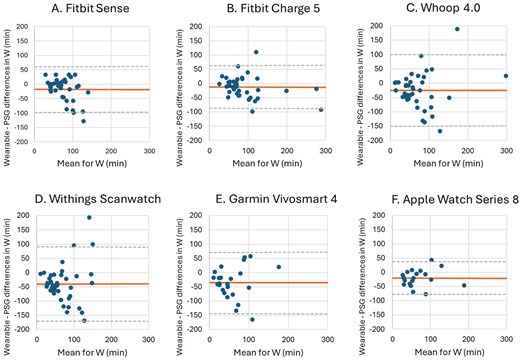
Lie still and awake, and the machine may give you credit for sleeping. You know there was a waking stretch. The record may smooth it away.
For somebody trying to understand a broken night, that is an inconvenient place for an instrument to be uncertain.
There is a defence, and it deserves stating. Sleep stages are not boxes the brain clicks into. Human scorers disagree too. The borders are soft.
And there are devices that read the brain more directly.
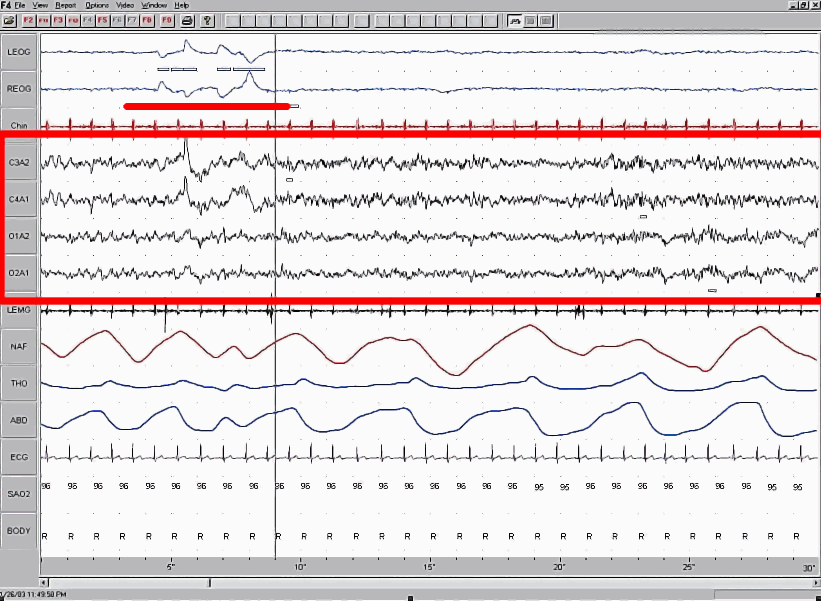
In a 2020 comparison involving twenty-five people, the Dreem dry-EEG headband staged sleep with 83.5% accuracy against the study’s reference. The five human experts averaged 86.4%. Several authors worked for Dreem, and those figures belong to that comparison, not to everything now sold as consumer EEG.
More accurate staging still leaves a question: what should a person be expected to do with the result?
You can have a well-validated graph and still be asking the wrong thing of it. The graph can tell you which stage the night resembled. It cannot settle what that night meant to the person who had it.
The sleep score
The hypnogram. The variability. The temperature curve. The respiratory rate.
A score out of a hundred.
That is the part built to be glanced at. All the richness has arrived at the screen, and the screen has made it legible.
Oura calls scores of eighty-five and above “optimal”. Its score combines several contributors and can count naps. This is not simply an eight-hour rule disguised as an algorithm. It is a more elaborate judgement about what counts as a good night.
The wearer has a feeling. The device has a number.
When the two disagree, somebody has to decide which one to trust.
In 2017, clinicians described three patients preoccupied with perfecting their tracker readings. They called the pattern orthosomnia. Three cases cannot tell us how often it happens. They can tell us that, for some people, trying to get sleep right becomes another task to take to bed.
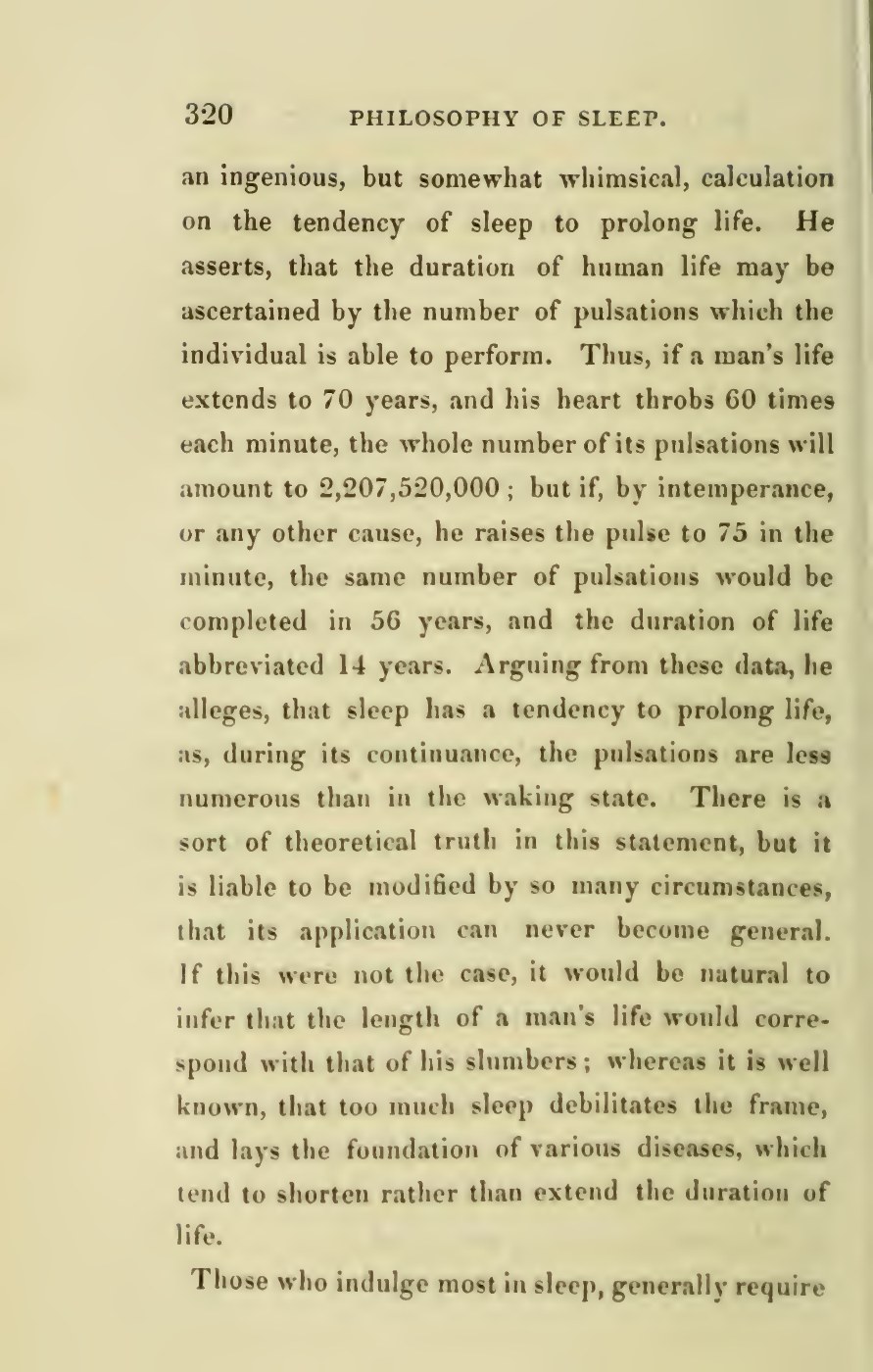
There is an older version of the same temptation. On the next page of Macnish’s book, a physician named Barry calculates a lifetime as a fixed allowance of heartbeats. Slow the pulse in sleep, the argument goes, and the allowance lasts longer.
Macnish calls the calculation ingenious but whimsical, and says too many circumstances prevent a general rule. p. 320
A fixed allowance of heartbeats is not a sound account of lifespan. The attraction is familiar: make the body countable, and its future appears to become something you can manage.
And the number can travel. A felt night stays difficult to export. A score is ready.
If it is shared into a workplace wellness programme, the old question returns in a new form. Is somebody securing more time for this person to recover, or checking whether the person recovered efficiently enough?
The answer depends on who receives the record and what they are allowed to do with it. Consent to share a number is not consent to every meaning somebody might attach to it.
That is what makes this story worth telling. There is no single molecule at its centre. A measurement can carry the instruction by defining what counts, and then allowing everything else to arrange itself around the definition.
The drug company did not invent the desire for a better night. The wearable did not invent the desire to know whether you had one. Both found something already waiting.
Which leaves the question you would think somebody would have asked by now. If a guaranteed night were on sale, eight hours, every time, no gap, most people would buy it without hesitating.
But a sleeper who buys a guaranteed night is also buying a shape somebody else drew.
The shape may help. It may relieve real suffering. It may even give somebody back a life that sleeplessness had taken from them.
A right to eight hours of rest was a claim made against an employer. A score of eighty-five is a claim made about a body.
Somewhere between the two, the person who owned the time became the person who had to account for it.


